
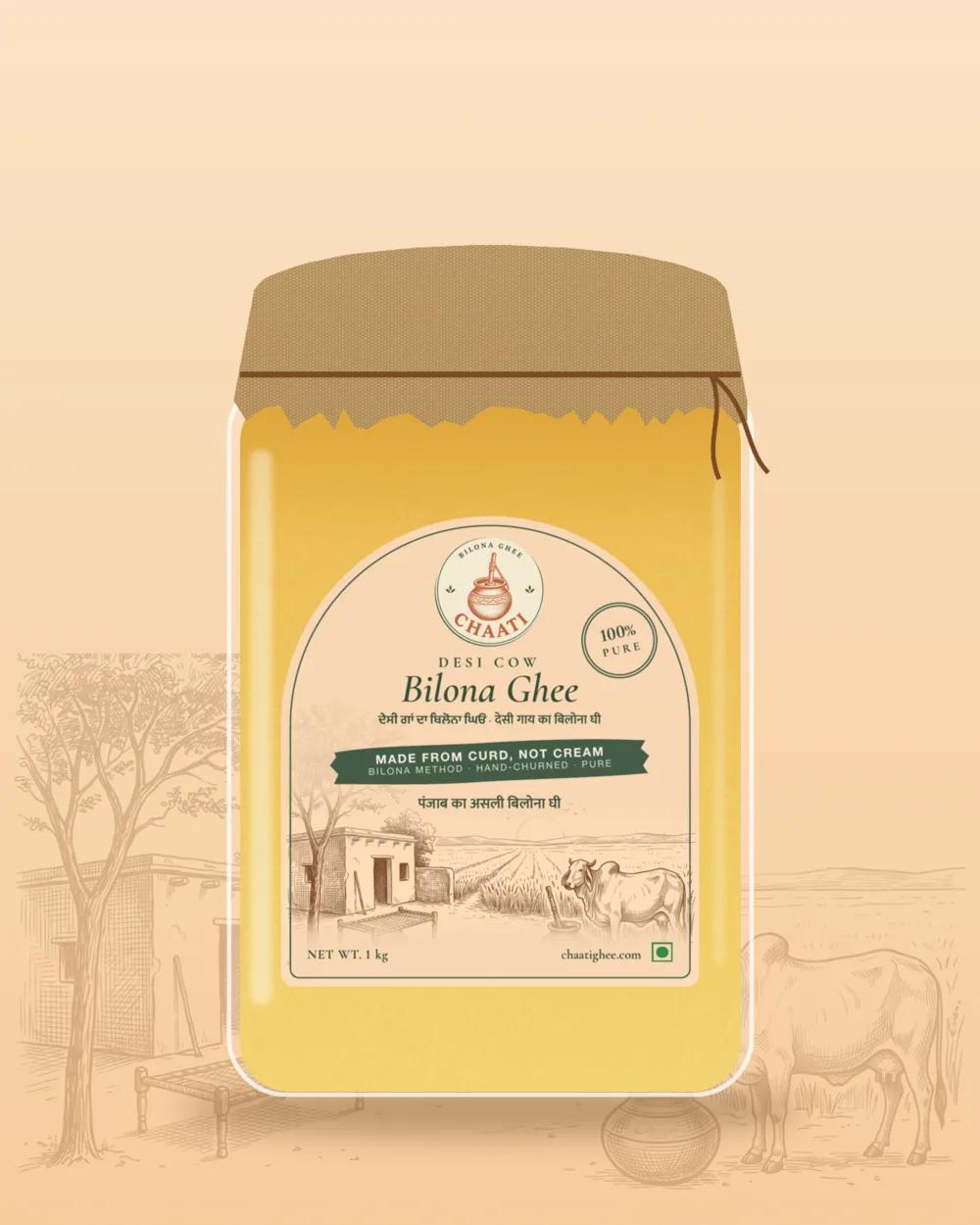
Desi cow · Bilona method · Barnala, Punjab
Made from curd,
not cream.
पंजाब का असली बिलोना घी
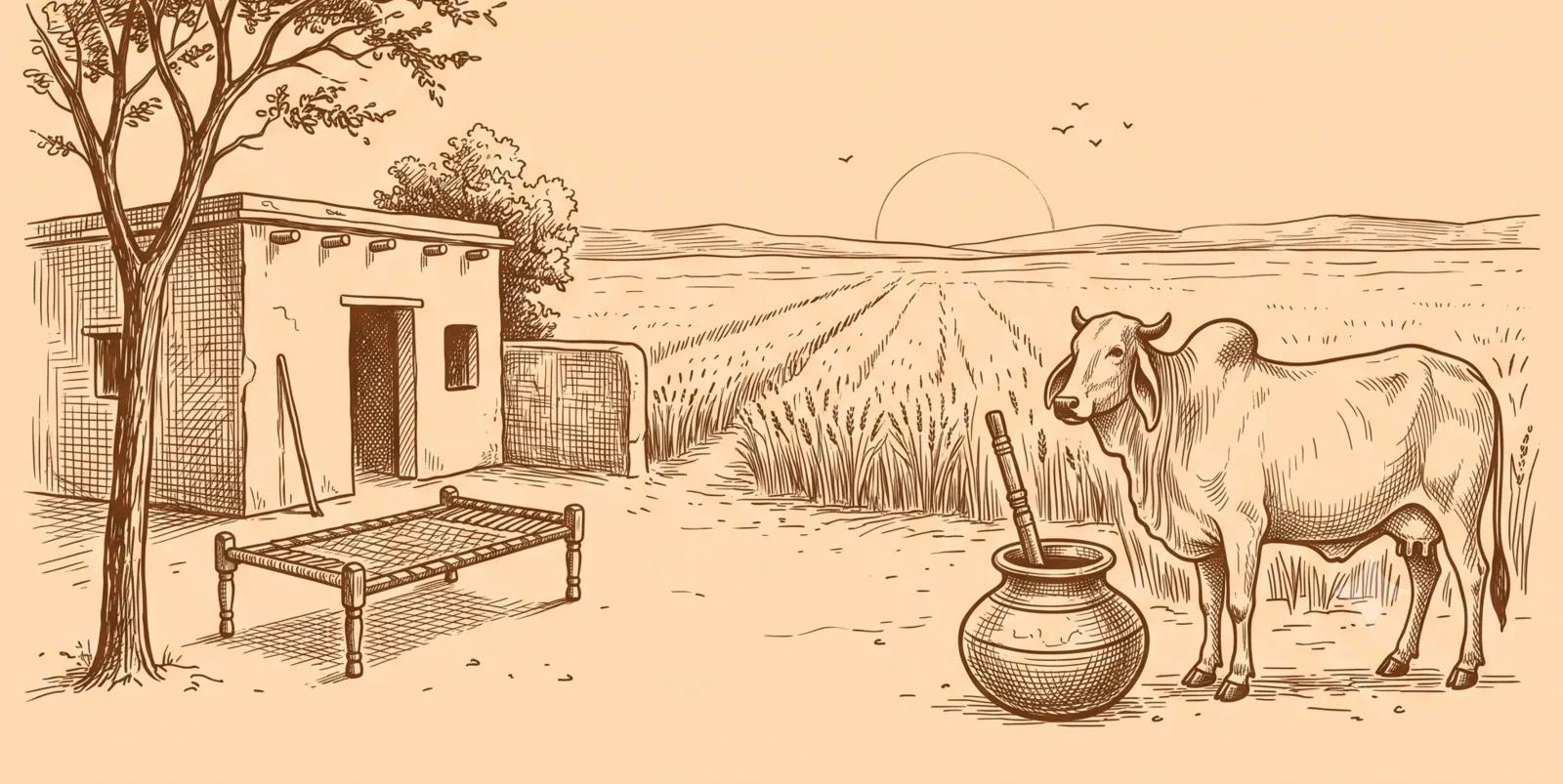
Our family sets fresh desi cow milk into curd, churns it by hand in a clay chaati and slow-cooks the makhan into golden, grainy ghee — the way Bebe always has.
₹200 off your first order above ₹1,500PEHLA200
 Fresh batch
every week
- Hand-churnedEvery batch churned in a clay chaati
- Only desi cow milkNo preservatives, colour or flavour
- Small batchesWhen a batch sells out, we say so
- Delivered across IndiaSealed glass jars, packed with care
This week's batch
Shop our ghee
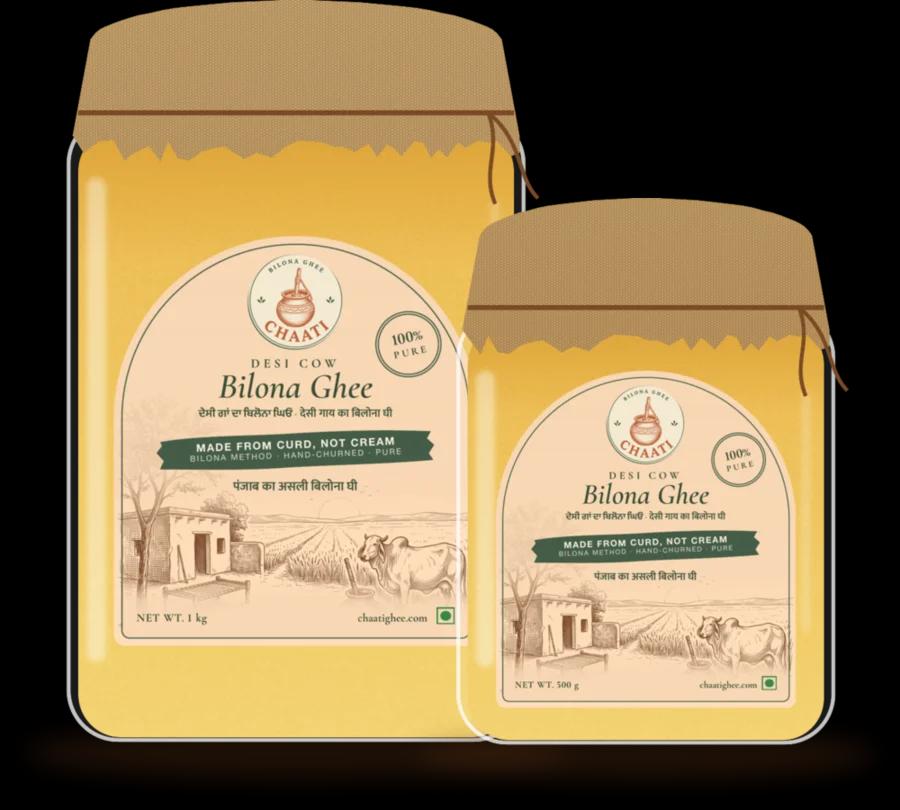
Glass jars, sealed and wrapped in jute. Freshly churned in small batches.
From our cows to your kitchen
Four slow steps, all by hand
It takes about 28 litres of milk and two days to make one kilo of Chaati ghee.
- 1
Fresh milk from our desi cows
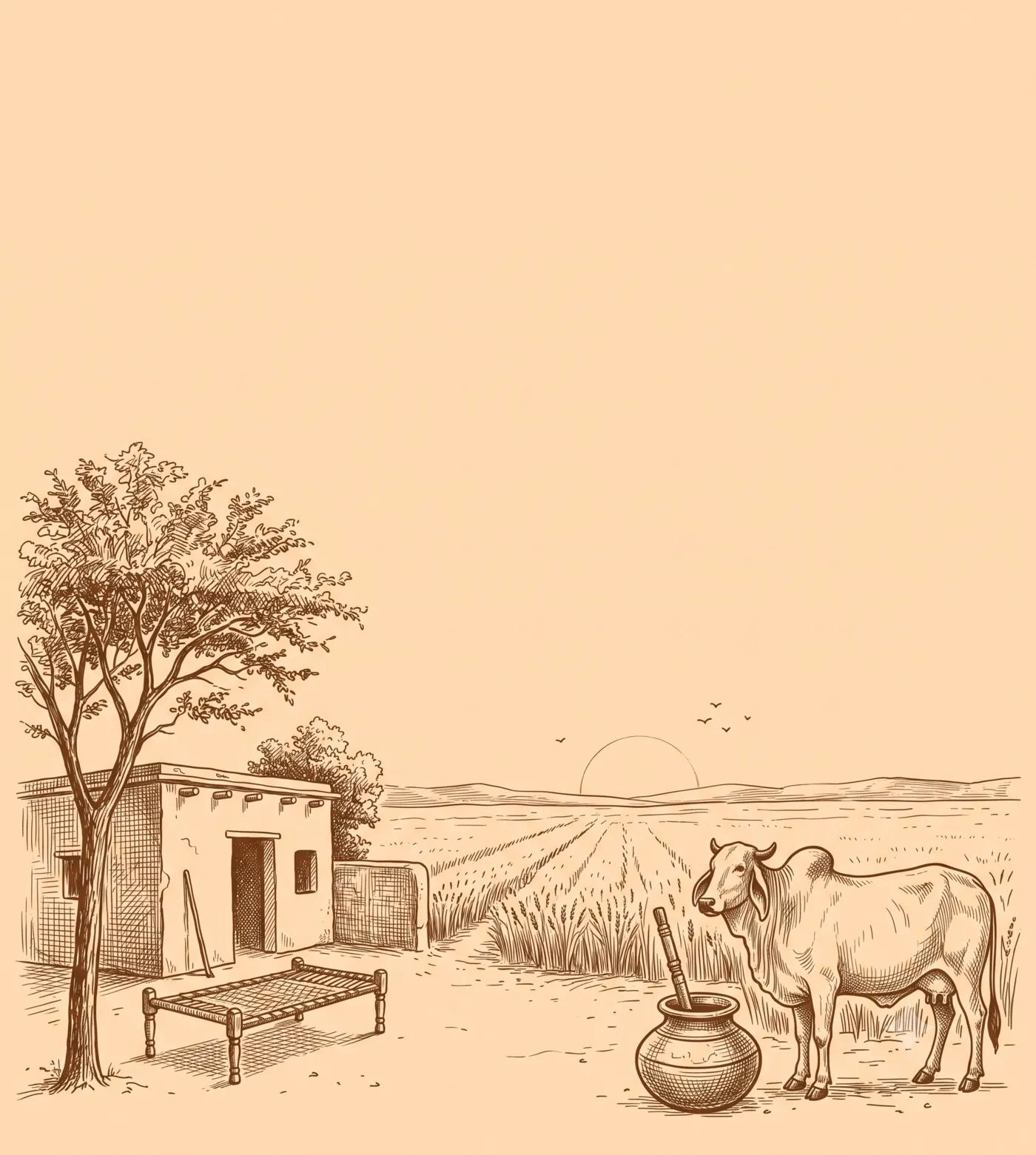
We milk our own desi cows at home in Barnala. The whole milk is boiled and left to cool — nothing is skimmed off.
- 2
Set into curd overnight
The milk is set into curd (dahi) in the evening with a spoon of yesterday's curd, and left to set through the night.
- 3
Hand-churned in the chaati
In the morning the curd is churned in a clay chaati with a wooden madhani until the makhan (white butter) rises and separates from the lassi.
- 4
Slow-cooked over a low flame
The makhan is heated slowly until the water is gone and the ghee turns clear and golden. It is filtered, cooled gently so it forms its grains, and filled into glass jars.
What makes it bilona
Two ways to make ghee
Most ghee on the shelf is made by heating cream skimmed off milk. Bilona ghee takes the long road — and you can taste the difference.
Most ghee
Cream → machine → ghee
Cream is separated from milk and heated in large batches. Quick and cheap, but the curd step — and the flavour it brings — is gone.
The Chaati way
Chaati bilona ghee
Milk → curd → hand-churned → ghee
Whole milk is set into curd, churned by hand into makhan, then slow-cooked. It takes far more milk and time — and gives the grainy, aromatic ghee our grandparents knew.
In your kitchen
A spoonful makes it home
On a hot roti, in dal tadka, in festive halwa or a warm glass of milk at night.
Melting on makki di rotiOver dal and jeera riceOn a fresh aloo parathaIn festive atta halwaThe natural daana of slow-cooked gheeThe daana
Grainy, golden, slow-cooked
Bilona ghee sets with a natural grain (daana) when it cools slowly. In summer it may melt and set again — that's how real ghee behaves.
- Set from curd, not cream
- Churned by hand, never by machine
- Slow-cooked on a low flame
- Sealed in glass, never plastic
Our story
Three generations, one chaati
In our home in Barnala, ghee was never bought. Bebe has churned it in a clay chaati for as long as we can remember, and our mother learnt it beside her. For years it went only to family and friends — now we're sharing it with yours.
ਬੇਬੇ ਦੇ ਹੱਥਾਂ ਦਾ ਸਵਾਦ
Read our storyBebe's chaati, BarnalaOur founding batch
Join our first 100 families
Every jar carries a hand-written tag with the date Bebe churned it. Order a jar, taste it on a hot roti, and tell us honestly on WhatsApp — your words will be the first reviews on this page.
Fresh batch every week
Hear first when the next batch comes off the fire
Small batches sell out. Leave your WhatsApp number and we'll message you once, when a fresh batch is jarred. No spam, ever.
The Chaati Journal
Guides & recipes from our kitchen
Guide·5 min read
How to tell real bilona ghee from cream ghee
Both are called desi ghee. Here is what actually differs, what you can notice at home, and what only a lab can tell you.
ReadGuide·3 min read
Why your ghee is grainy one day and liquid the next
Grainy in winter, runny in June, layered in between. None of it means the ghee has gone bad. Here is why it happens.
ReadGuide·3 min read
How to store desi ghee so it stays fresh
No fridge needed. Four simple habits keep a jar of ghee tasting fresh to the last spoon.
ReadGood to know
Questions people ask
What is bilona ghee?
Ghee made the traditional way: whole milk is set into curd (dahi), the curd is churned into makhan, and the makhan is slowly heated into ghee. Most commercial ghee skips the curd and churning and heats cream instead.
Which cows does the milk come from?
From the desi cows our family keeps at home in Barnala, Punjab.
Why is it grainy? Why is my jar liquid?
The grains (daana) form when ghee is slow-cooked and cools gently. Ghee melts around 30–35°C, so in summer it can turn liquid and set again when it's cooler. Both are natural; nothing is wrong with the ghee.
Is anything added?
No. Desi cow milk is the only ingredient. No preservatives, colour or flavour.