
How we make our ghee
Slow, by hand, the bilona way
Bilona ghee takes far more milk and time than cream ghee. Here is every step, exactly as it happens in our home.
 1
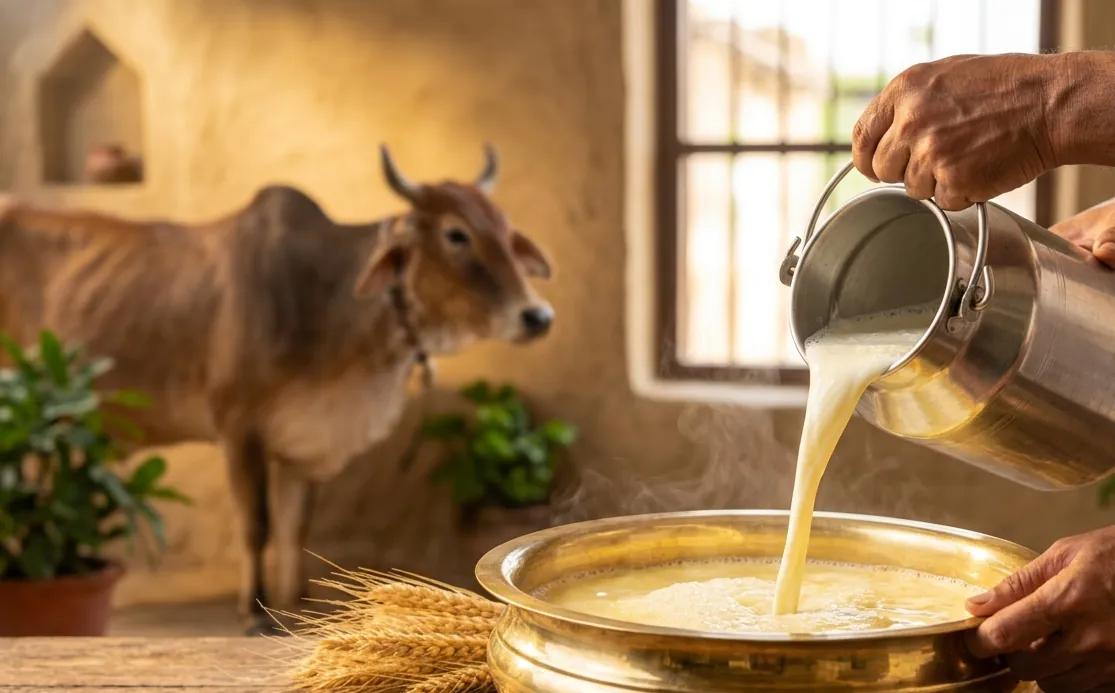
Fresh milk from our desi cows
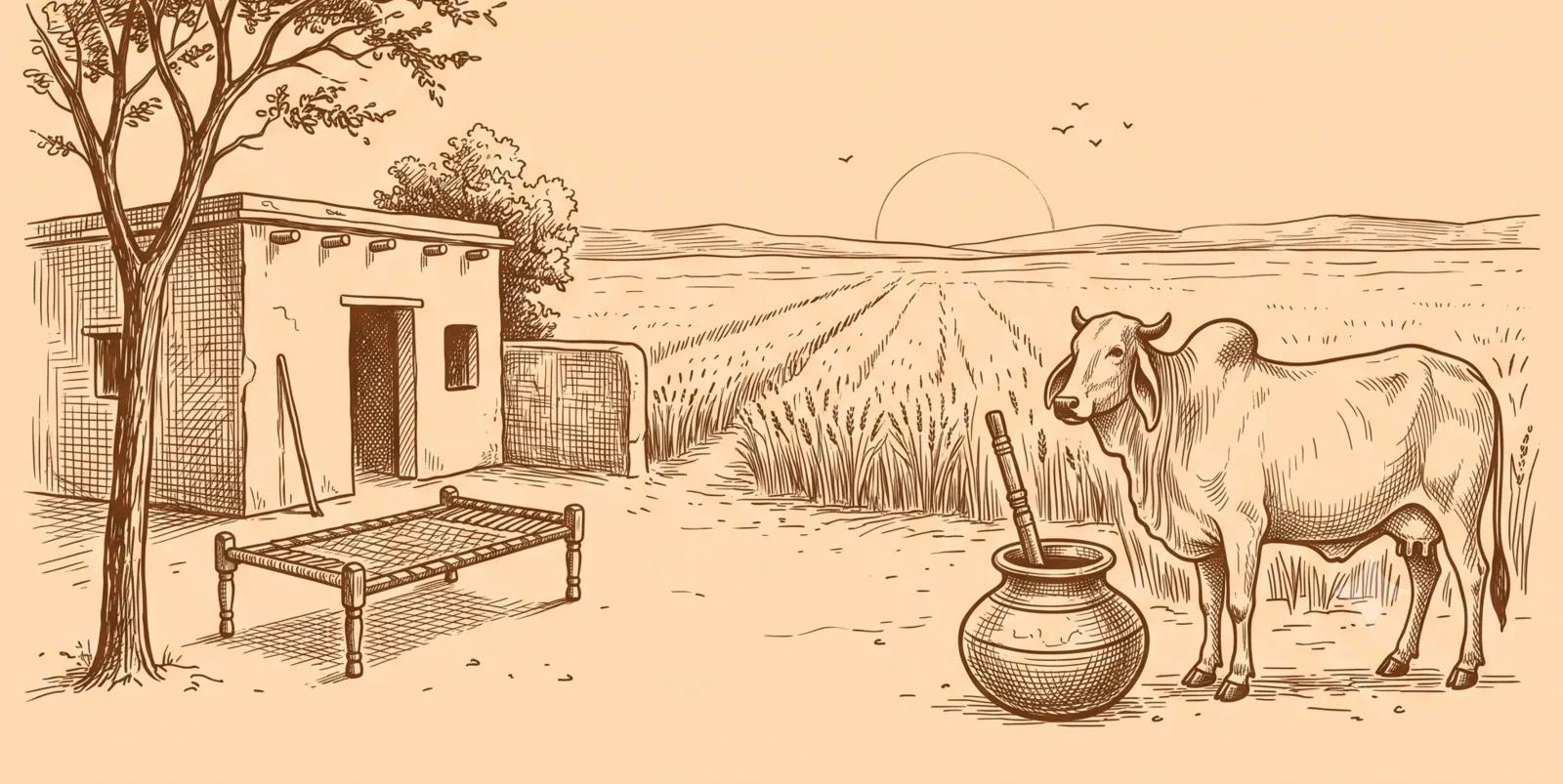
We milk our own desi cows at home in Barnala. The whole milk is boiled and left to cool — nothing is skimmed off.
 2
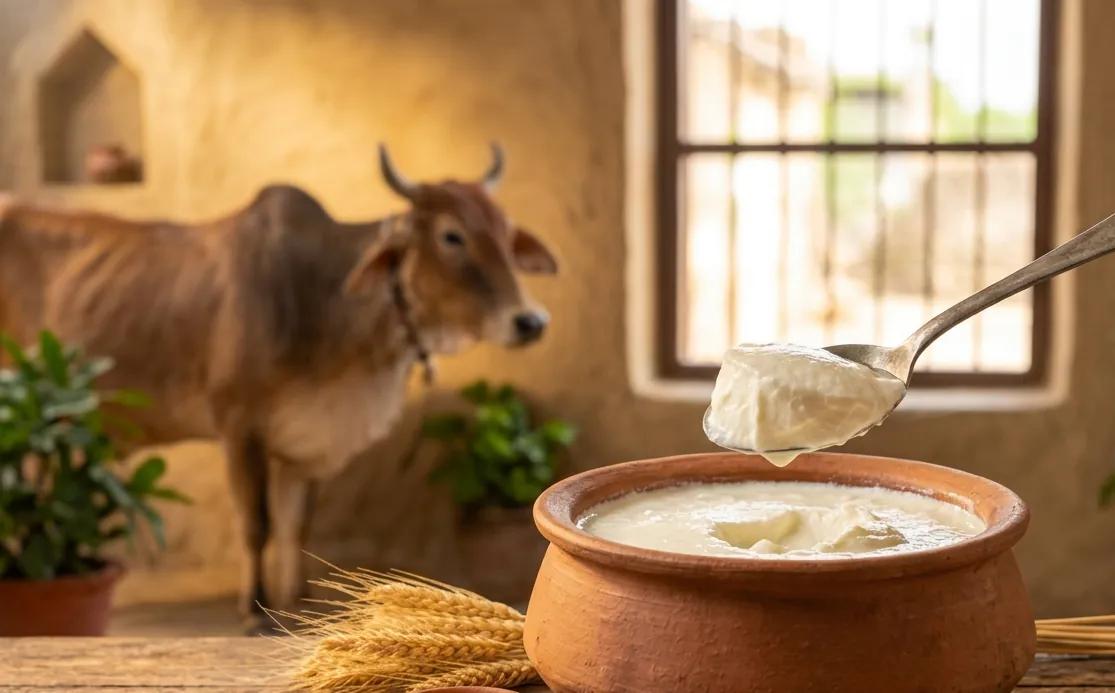
Set into curd overnight
The milk is set into curd (dahi) in the evening with a spoon of yesterday's curd, and left to set through the night.
 3
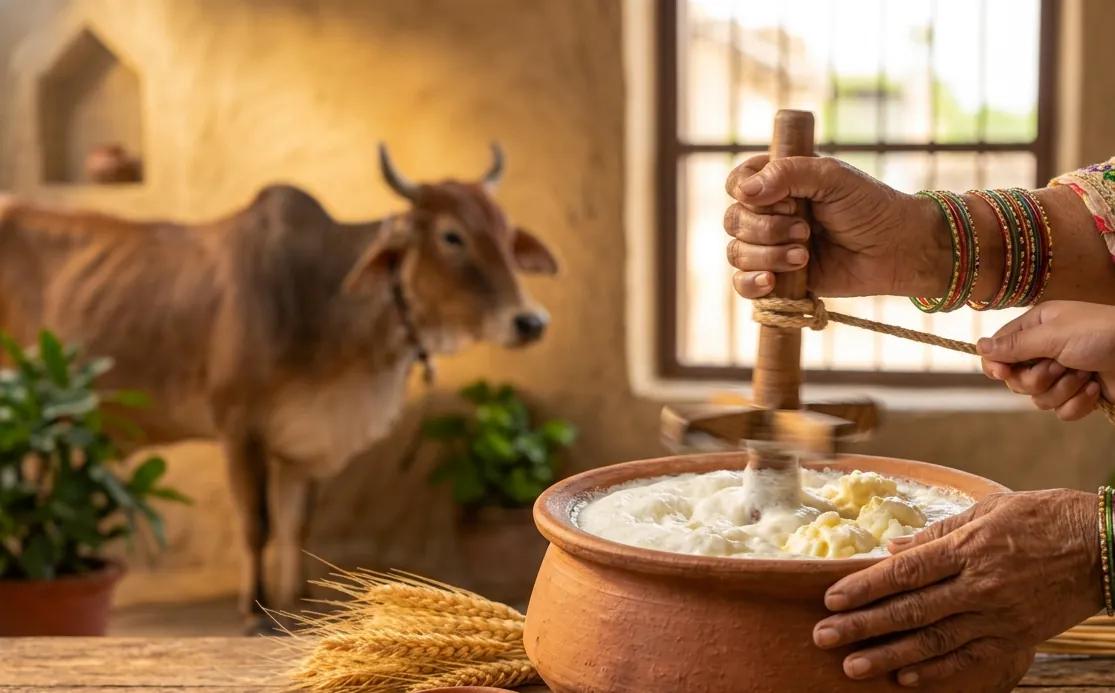
Hand-churned in the chaati
In the morning the curd is churned in a clay chaati with a wooden madhani until the makhan (white butter) rises and separates from the lassi.
- 4
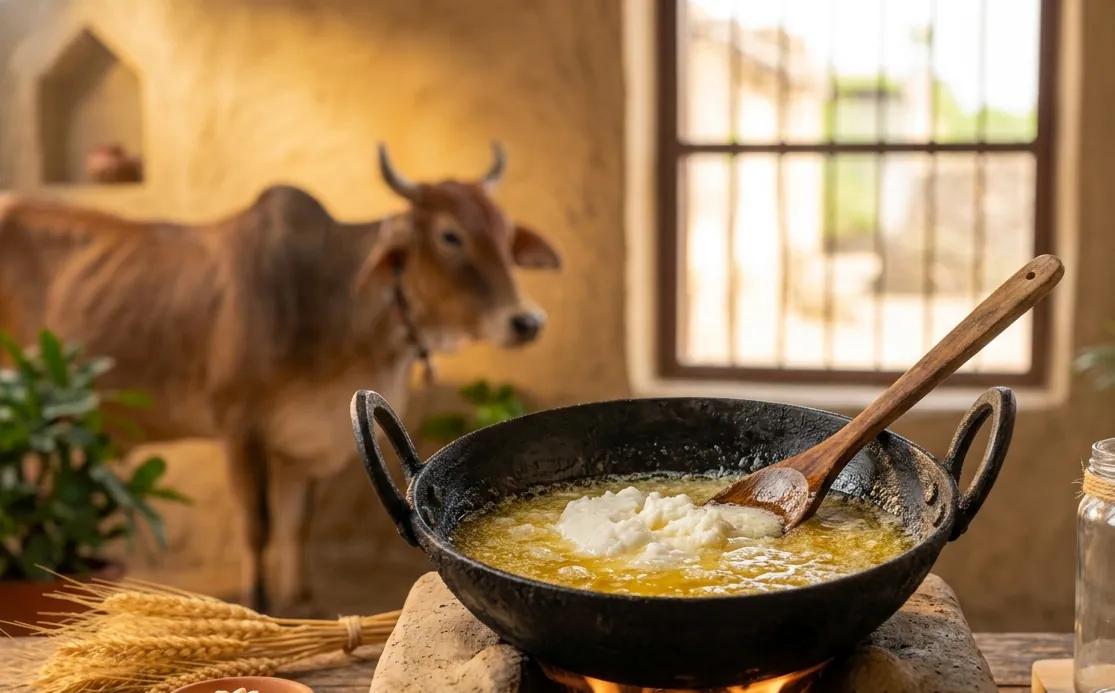
Slow-cooked over a low flame
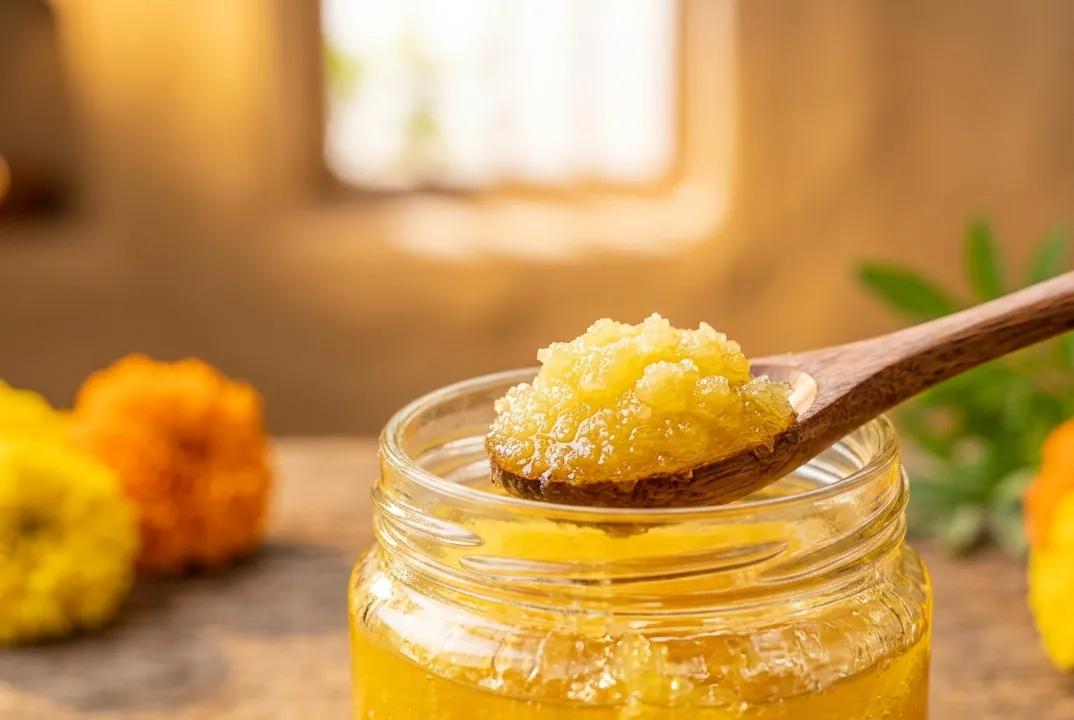
The makhan is heated slowly until the water is gone and the ghee turns clear and golden. It is filtered, cooled gently so it forms its grains, and filled into glass jars.
Watch
See the whole process
Milk to jar in one short film.
Our film is on its way
Our standards
What every batch must pass
Small batches mean we can check each one ourselves.
Only our desi cow milk
No bought cream, no other fats.
Smell, taste and grain
Every batch is checked for aroma, taste and the natural daana before it's jarred.
Clean, dry jars
Glass jars are washed, dried and sealed with a tamper-evident band.
Batch date on every jar
So you always know when your ghee was made.
Packing
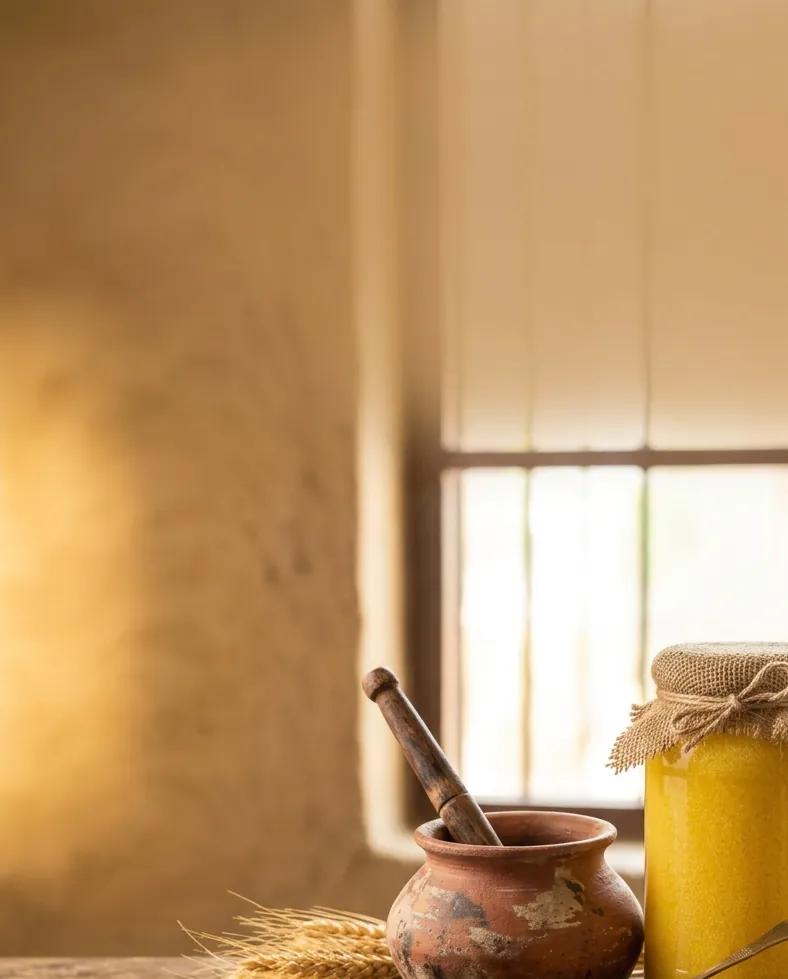
Sealed in glass, wrapped in jute
Each jar is sealed, wrapped in jute with a hand-written batch tag, and packed to travel safely.