
Guide · 12 October 2026 · 3 min read
Why your ghee is grainy one day and liquid the next
Grainy in winter, runny in June, layered in between. None of it means the ghee has gone bad. Here is why it happens.
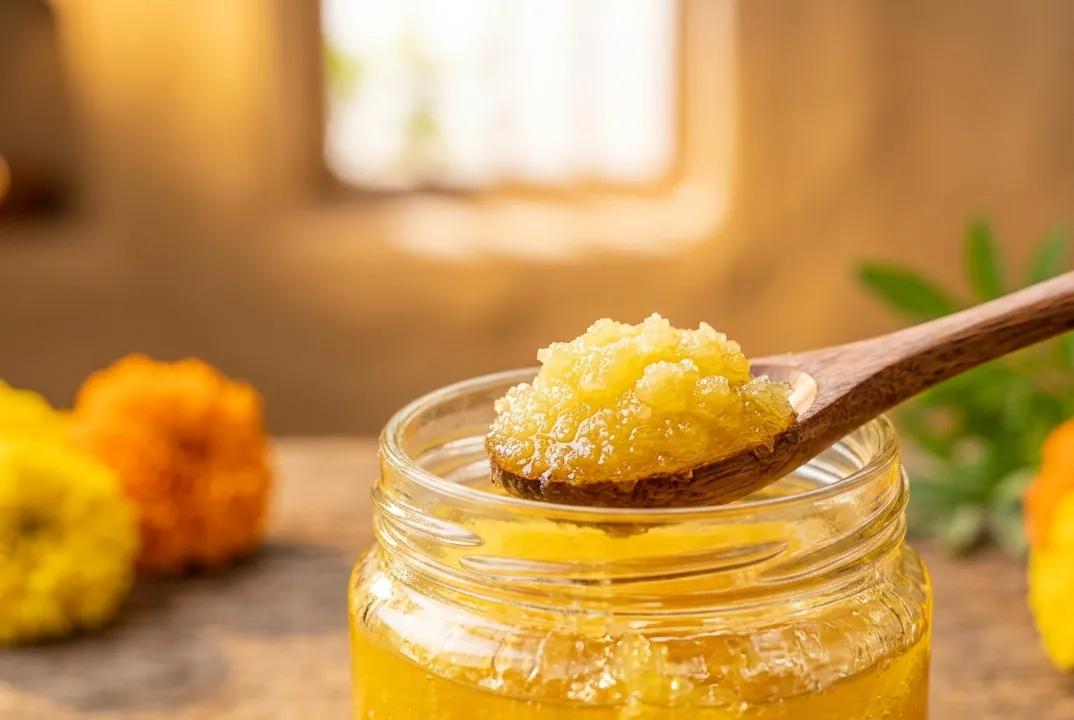
Ghee is a mix of fats that melt at different temperatures. That is why one jar can look completely different from season to season, or even from the top to the bottom.
The daana (grain)
When ghee cools slowly after cooking, some fats crystallise into small grains. That is the daanedaar texture people in Punjab look for in homemade ghee. Slow cooking and slow cooling give more grain.
Liquid in summer, solid in winter
- Above roughly 30 to 35°C, ghee melts into a clear golden liquid.
- In a cool room it sets soft and grainy.
- In a cold winter kitchen it can turn quite hard.
- Half liquid on top and grainy below is normal when the day is warm and the night is cool.
If a melted jar sets again smooth instead of grainy, that is fine too. It just cooled faster. Taste and smell are what matter.
Made from curd, not cream.
Our family's hand-churned desi cow bilona ghee, from Barnala.
Keep reading
Guide·5 min read
How to tell real bilona ghee from cream ghee
Both are called desi ghee. Here is what actually differs, what you can notice at home, and what only a lab can tell you.
Read
Guide·3 min read
How to store desi ghee so it stays fresh
No fridge needed. Four simple habits keep a jar of ghee tasting fresh to the last spoon.
Read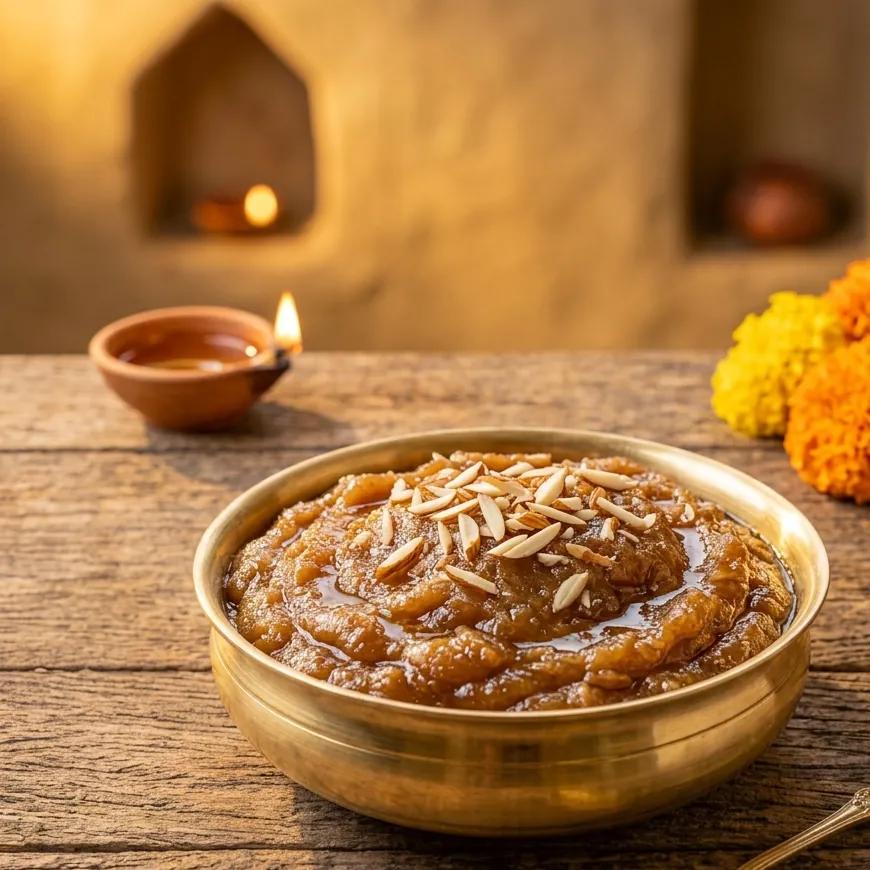
Recipe·4 min read
Atta halwa, the way it's made at the gurudwara
Equal parts atta, ghee and sugar. The simplest Punjabi sweet, and the one where good ghee matters most.
Read